In 2015, a developer named Keith Rubenstein put up a billboard on the Mott Haven waterfront that read "Piano District." His company, Somerset Partners, had spent $58 million buying land along the Harlem River and wanted a name that sounded like the next SoHo. The sign came down within a year, chased off by a neighborhood that had been living under its own name for over a century and had no interest in a rebrand cooked up for a real estate pitch deck.
Eleven years later, nobody in Mott Haven calls it the Piano District. Wikipedia's entry on the neighborhood says as much: the name never found traction, and neither did "SoBro," the parallel rebrand attempt for the South Bronx more broadly. But here's the part that gets lost when people tell this story as a simple win for the neighborhood over the developers: the piano name wasn't invented. It was borrowed, badly, from something that was already true. And the actual, lived version of that history is still standing on the corner of Lincoln Avenue and Bruckner Boulevard, doing more for daily life in Mott Haven this fall than any billboard ever did.
The Name Was Real Before It Was a Pitch
By the early 1900s, Mott Haven and neighboring Port Morris held so many piano manufacturers, Estey Piano & Organ Company, Kroeger Pianos, Beethoven Pianos, the Doll Piano Factory, that the area earned the nickname "Piano Capital of the United States," according to Bronx Historical Society historian Lloyd Ultan. That era ended for an unglamorous reason: Thomas Edison's phonograph made piano purchases less essential, and one by one the factories closed or pivoted.
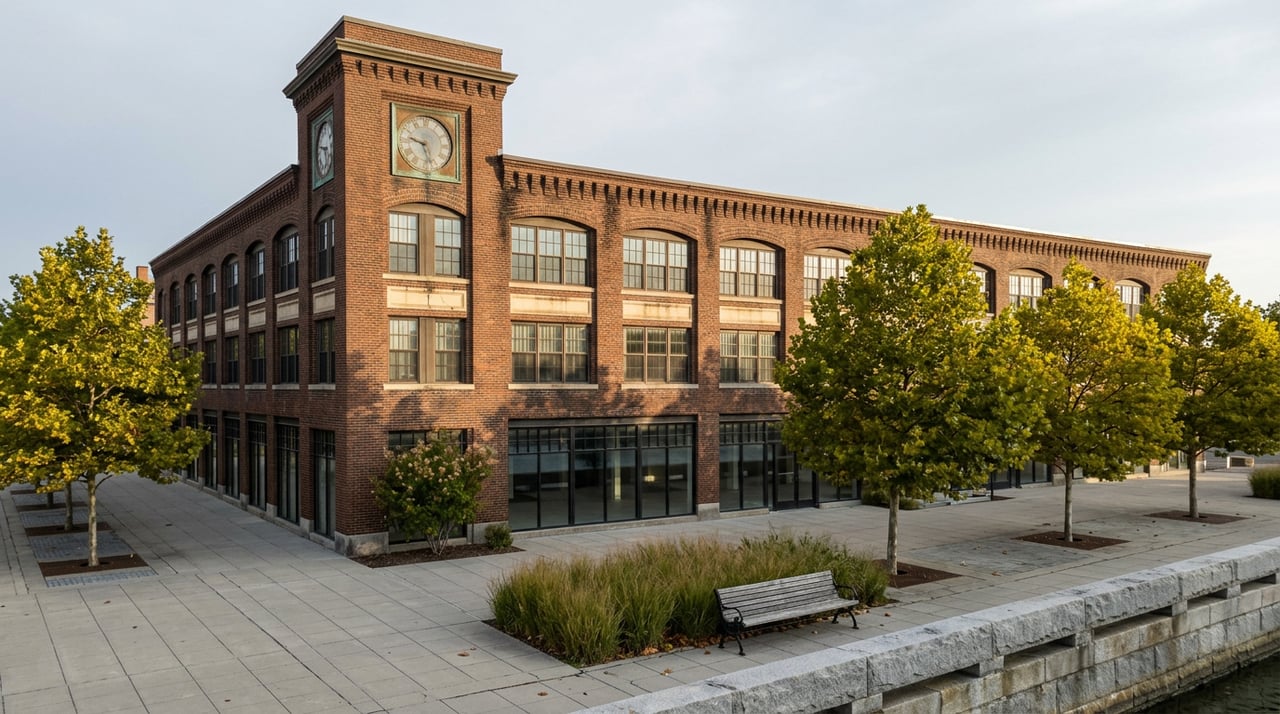
What survived is the Estey Piano Company Factory building itself, completed in 1886 at the corner of Lincoln and Bruckner, easy to spot by its terra cotta detailing and the corner clock tower that gave the building its current name. It's landmarked. It's the oldest known former piano factory still standing in the Bronx. When Rubenstein's marketing team reached for "Piano District" a century later, they were pointing at a building that had already earned the association the hard way, through decades of actual manufacturing, not a season of branding.
The Clock Tower Kept Doing What It Always Did
Carnegie Management converted the Estey factory into residential lofts back in 2002, well before anyone thought to slap a new name on the neighborhood. That project, run by Isaac Jacobowitz, is credited by real estate trade coverage with putting Mott Haven on the map in the first place, years before the billboard went up. The building still holds that role today. Charlie's Bar & Kitchen, a New American spot with Latin and Southern accents, operates out of the Clock Tower's ground floor and was confirmed open as recently as June 2026 by a local dining guide that verifies every listing before publishing it.
That continuity matters more than it sounds like it should. A neighborhood that gets renamed every real estate cycle is a neighborhood where nothing you rely on can be counted on to still be there next year. The Clock Tower has now outlasted the billboard, the developer who put it up, and roughly a decade of speculation about whether Mott Haven would turn into the next Williamsburg. It hasn't turned into anything except itself, a little more built out.
What Actually Changed Wasn't a Name. It Was a Park.
If you want to point to one real, physical, measurable shift in how people in Mott Haven spend a Tuesday evening, it's Bankside Park. Brookfield Properties cut the ribbon on the one-acre waterfront park and esplanade in June 2024, part of its $950 million Bankside development along the Harlem River. Local advocacy group South Bronx Unite, which had spent over a decade pushing for public river access in the neighborhood, put the significance in plain terms: this was the first time in more than a century that Mott Haven residents could walk up to the Harlem River without trespassing on industrial land.
That's not a marketing claim. It's a fact about a century of geography. The South Bronx sits on a peninsula with water on three sides, and for most of that time the waterfront belonged to freight yards, waste transfer stations and truck depots, not to the people who lived a few blocks away. Bankside Park didn't rename anything. It just opened a gate that had been closed since roughly the Coolidge administration, according to Brookfield's own framing of the project. Café seating and shaded wood-decked outlooks now sit where none of that existed before, and advocates have been candid that the park is still hard to find, tucked behind the residential towers, and that it's only one piece of a longer waterfront access fight that isn't finished.
What's Actually Open This Fall
The restaurant scene tells a similar story: quieter, less branded, and more durable than the billboard version. A local dining guide that verifies every listing before publishing confirmed the following were open as of June 2026:
- Maisonetta, plating French technique over modern Mexican cooking
- Charlie's Bar & Kitchen, the New American bar inside the landmarked Clock Tower
- Mottley Kitchen on East 140th Street, serving coffee, breakfast and lunch
- 787 Coffee on Third Avenue, roasting beans grown on the company's own farms in Puerto Rico
Add to that list Nourish, a cafe and restaurant that opened in 2025 in the former Chocobar Cortes space on Alexander Avenue. It's run by the nonprofit Oyate Group, whose founder Tomas Ramos bought out Chocobar's debt after it closed, saving the space rather than watching it sit vacant. Nourish's dinner menu runs globally inspired, Korean fried chicken alongside steak frites and duck fat biscuits, and the kitchen stays open until 1 a.m. on weekdays and 2 a.m. on weekends, filling a late-night gap Ramos said the neighborhood didn't have before. Nourish is still hosting events into this fall, including a TransVisionaries program scheduled for October 6, 2026.
The calendar has a specific new entry worth marking down if you live here: Taste of Korea in the Bronx: Fall Edition runs September 26 and 27, 2026, at 171 Lincoln Avenue, a short walk from the Clock Tower and the waterfront. It's the kind of event that only shows up on a neighborhood's radar once local organizers decide the foot traffic and the appetite are there to support it.
The Actual Lesson
None of this required a new name. The waterfront access came from a decade of organizing and a development deal, not a sign. The restaurant scene came from a nonprofit buying out a failing tenant's debt and a handful of small operators deciding the corridor was worth a lease. The one piece of the neighborhood that did get a rebrand attempt, the billboard, is the piece that didn't survive.
That's worth remembering the next time a listing description or a marketing push tries to sell you a neighborhood's future based on what it's about to be called. Mott Haven's real changes showed up as a park you can sit in and a handful of restaurants you can walk to, under the same name the neighborhood has used since Jordan Lawrence Mott bought the land in 1849.
If you're weighing what a corner of the South Bronx is actually worth right now, rebrand aside, that's a conversation grounded in comparable sales and current leasing activity, not in what a billboard once promised. Asset CRG works this market block by block. Request a Property Valuation & Off-Market Access if you want the numbers behind a specific address here.