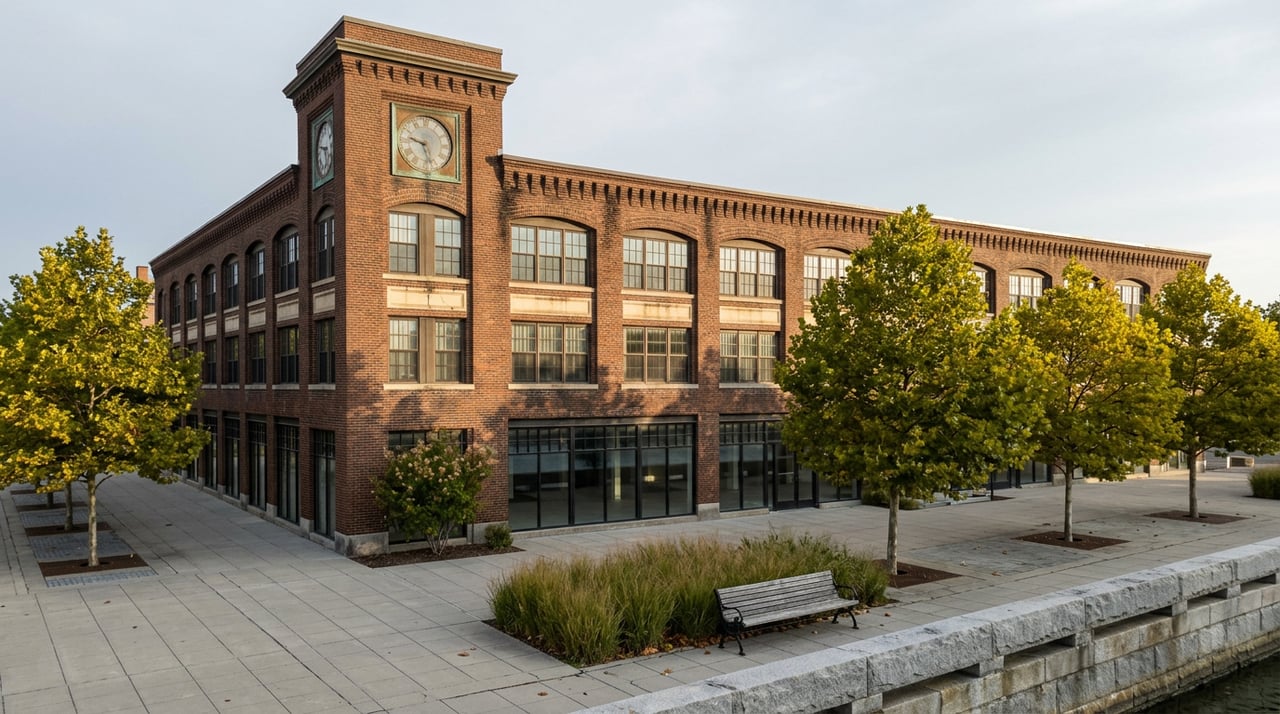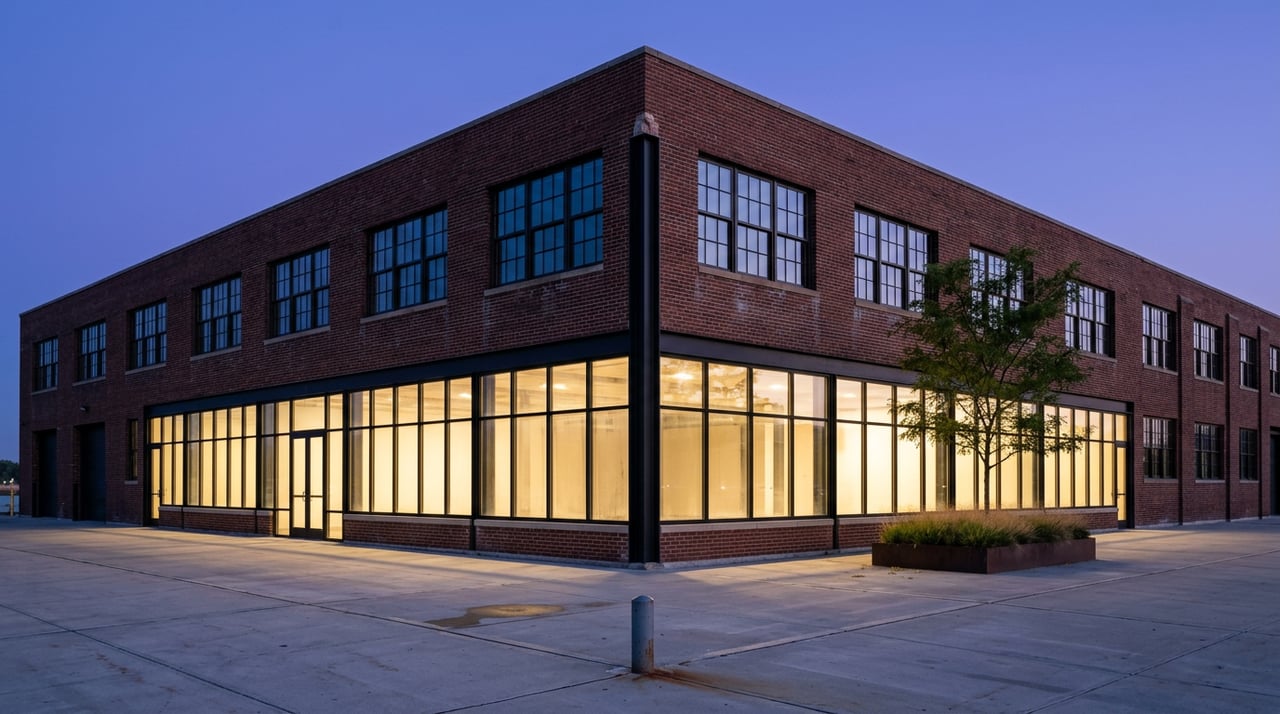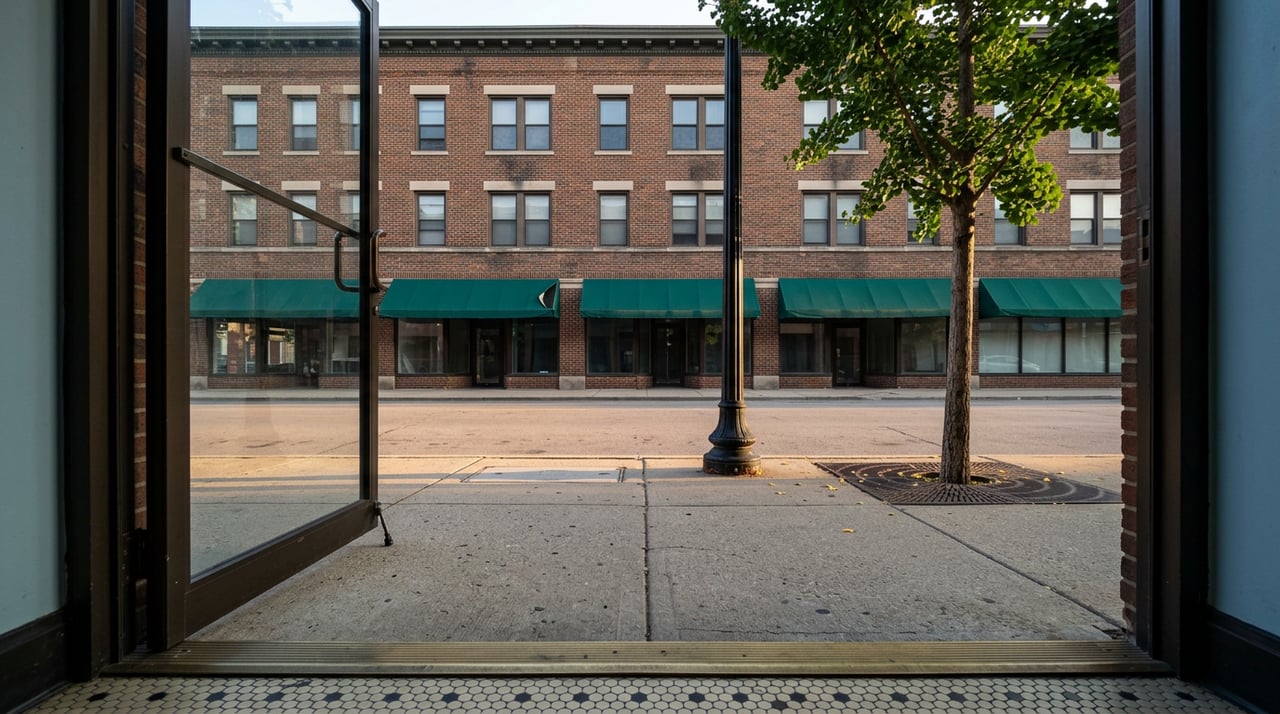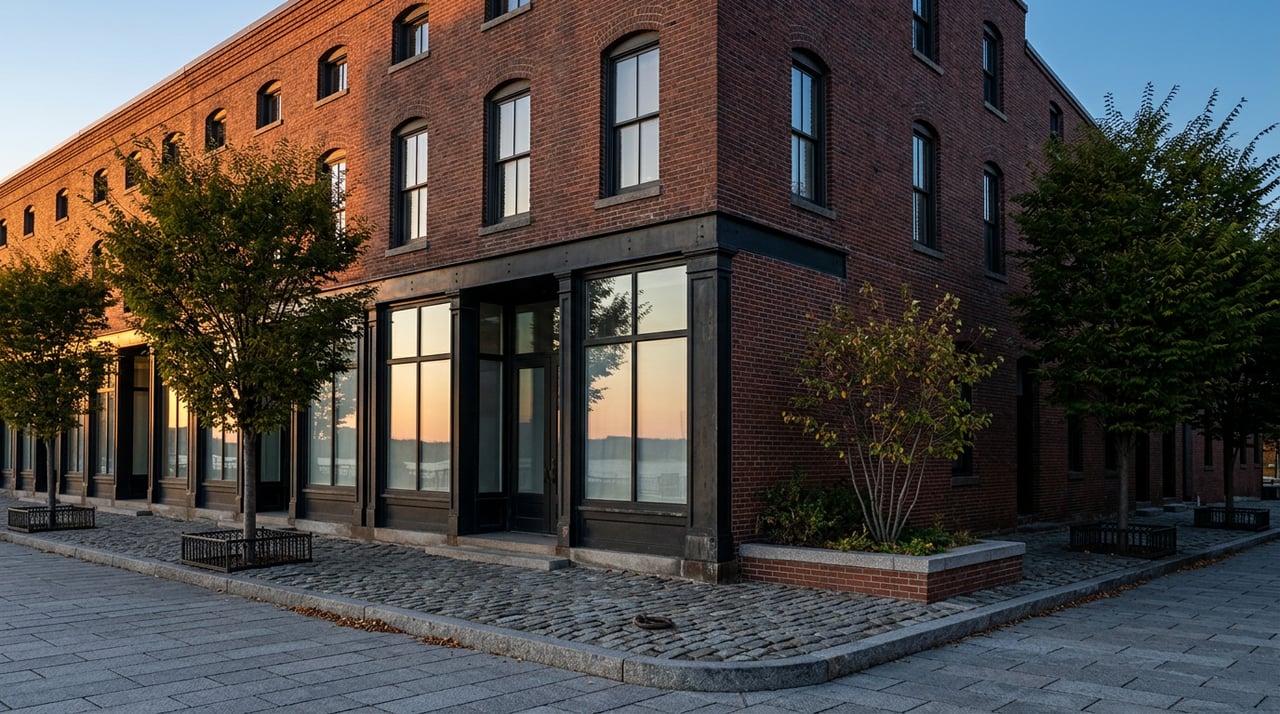
Walk down Fulton Street toward the water this month and you'll pass a building wrapped in construction scrim where the Tin Building used to be, its brick facade half hidden behind banners for something called Daydream. If you haven't been past South Street in a while, the sign might stop you. Jean-Georges Vongerichten's food hall, the one with the twenty-plus restaurants and the private tasting studio and the escalators up to a second floor of bars, is not there anymore. In its place: an inflatable art museum that charges forty dollars for adults and lets kids under twelve in for twenty-six.
That swap is the kind of thing that makes a longtime Seaport resident wonder if the neighborhood is losing something. It isn't. It's just being honest about what was already true.
What actually closed, and when
The Tin Building didn't fade out. Seaport Entertainment Group and the food hall's operator pulled the plug all at once. A February 23, 2026 press release from Seaport Entertainment Group confirmed that the current food and beverage operations at the Tin Building would close immediately to begin preparations for the new tenant. No wind-down, no farewell weekend. One day it was serving branzino tacos at the Fulton Fish Co. counter, the next it was dark.
The financial backstory explains the speed. Reporting on the closure traced the Tin Building's losses to roughly $100,000 a day, adding up to an estimated $83 million since the space opened in September 2022, according to coverage from Archpaper. That's not a slow bleed you fix with a menu refresh. That's a building whose costs never matched what a food hall on a pier can actually charge for lunch, no matter how good the pastry chef is or how many objets d'art line the walls.
What moved in instead
The replacement opened faster than most New Yorkers expected. Downtown Alliance reported that the Balloon Museum opened at 96 South Street on August 7, 2026, taking over all 58,000 square feet of the former food hall. It's the first permanent U.S. location for a concept that has already drawn more than 7 million visitors worldwide across cities like Rome, London and Miami, per the same February 2026 lease announcement.
The inaugural exhibition, Daydream: Air Becomes Art, leans on names that carry outside the art world too. Forbes coverage describes a centerpiece installation by Marina Abramović alongside work from Turner Prize winner Martin Creed and artist Alex Schweder. It's built for people who touch and move through the art rather than stand back and look at it, which is a different kind of foot traffic than a restaurant ever needed. You don't need a reservation. You need a timed ticket and about ninety minutes.
The closure most people walked right past
The Tin Building got the headlines because Jean-Georges' name was on the door. A quieter closure happened one floor down the pier and nobody wrote a press release about it. Malibu Farm, the California-style restaurant that had anchored a corner of Pier 17 since 2019, shut down permanently on January 9, 2026. Local coverage from Tribeca Citizen described the space as having an amazing view of the bridge but a cavernous footprint that never quite worked as a single restaurant.
Something is already lined up for the gap. According to the same Tribeca Citizen report, a concept called Willett's is planning to open at 21-25 Fulton Street, just past the lighthouse, with four separate bars under one roof: coffee, wine, beer and oysters, and whiskey and cocktails. The reported opening date is July 4, which happens to land on the Seaport's 250th anniversary year. Whether that date holds is worth watching, but the intent is clear: smaller, split-format venues rather than one big single-operator restaurant.
Meanwhile Meow Wolf, the immersive art and exhibition company, has its own item on Community Board 1's docket this year, meaning the Balloon Museum isn't a one-off. The pattern at the Seaport in 2026 is museums and multi-concept bars replacing single large-format restaurants, not restaurants replacing restaurants.
What never stopped running
Here's the part that actually matters if you live down here: none of the neighborhood's recurring, free or low-cost draws paused for any of this. The Fulton Stall Market, an indoor farmers market at 91 South Street that has operated since 2017 and connects more than 100 regional farmers and producers with the neighborhood, kept its Saturday hours through the entire Tin Building saga. Taste of the Seaport, the annual culinary festival on Piers 16 and 17 that raises money for the two local public schools, PS 397 and PS 343, returned again this year on September 26. Alfargo's Marketplace, a vintage and menswear pop-up with more than forty independent vendors, ran its usual September weekend at Seaport Square on the 12th and 13th.
And the Rooftop at Pier 17 never blinked. Its fall concert calendar runs from Modest Mouse on October 8 through Steve Aoki on October 24 to a Halloween night headlined by Krewella and Nervo with ARTY and DVBBS on October 31. None of that programming depends on whether the building next door is selling seafood or selling art tickets.
The thing this actually tells you
If you only track the Seaport through what closes, the story reads like decline: a celebrity chef's flagship shuts down, a beloved SoCal restaurant disappears after seven years, and a museum moves into the wreckage. But look at what kept the lights on through all of it and a different picture forms. The Seaport's actual economic engine was never the sit-down restaurant with a wine list. It's the recurring, ticketed or free event: a Saturday market, a fall festival, a concert series that sells out a rooftop for two months straight. Those formats don't carry the fixed costs of a 58,000 square foot food hall with a private dining room built to seat 75. They also don't lose $100,000 a day.
That's not a knock on the ambition of what the Tin Building tried to do. It's just a clearer read on what the site can actually support. A museum with timed tickets and a four-bar concept with lower overhead per square foot are both, in their own way, admissions that the old model asked too much of one waterfront address. The neighborhood didn't get quieter. It got more honest about which parts of its calendar were doing the real work all along.
What to watch through the rest of 2026
| Date | What's happening | Where |
|---|---|---|
| Sept 26 | Taste of the Seaport culinary festival | Piers 16 and 17 |
| Oct 4 | Chief Keef | Rooftop at Pier 17 |
| Oct 8 | Modest Mouse | Rooftop at Pier 17 |
| Oct 9-10 | DJ Pauly D, San Holo | Rooftop at Pier 17 |
| Oct 24 | Steve Aoki | Rooftop at Pier 17 |
| Oct 31 | Halloween night: Krewella, Nervo, ARTY, DVBBS | Rooftop at Pier 17 |
| Ongoing | Fulton Stall Market, Saturdays | 91 South Street |
| Ongoing | Balloon Museum, Daydream exhibition | 96 South Street |
If a four-bar concept called Willett's actually opens at 21-25 Fulton on its stated July 4 target, and if Meow Wolf clears its Community Board 1 review, the next twelve months at the Seaport look less like a neighborhood recovering from a closure and more like one settling into what it's good at.
For anyone tracking how a corridor like this behaves when a single anchor tenant changes hands, or what that shift means for the retail spaces around it, that's exactly the kind of read our team at Asset CRG puts together for owners and occupiers across Lower Manhattan. If you're weighing a move on retail space in this part of the city, reach out and we'll walk you through what we're seeing on the ground.