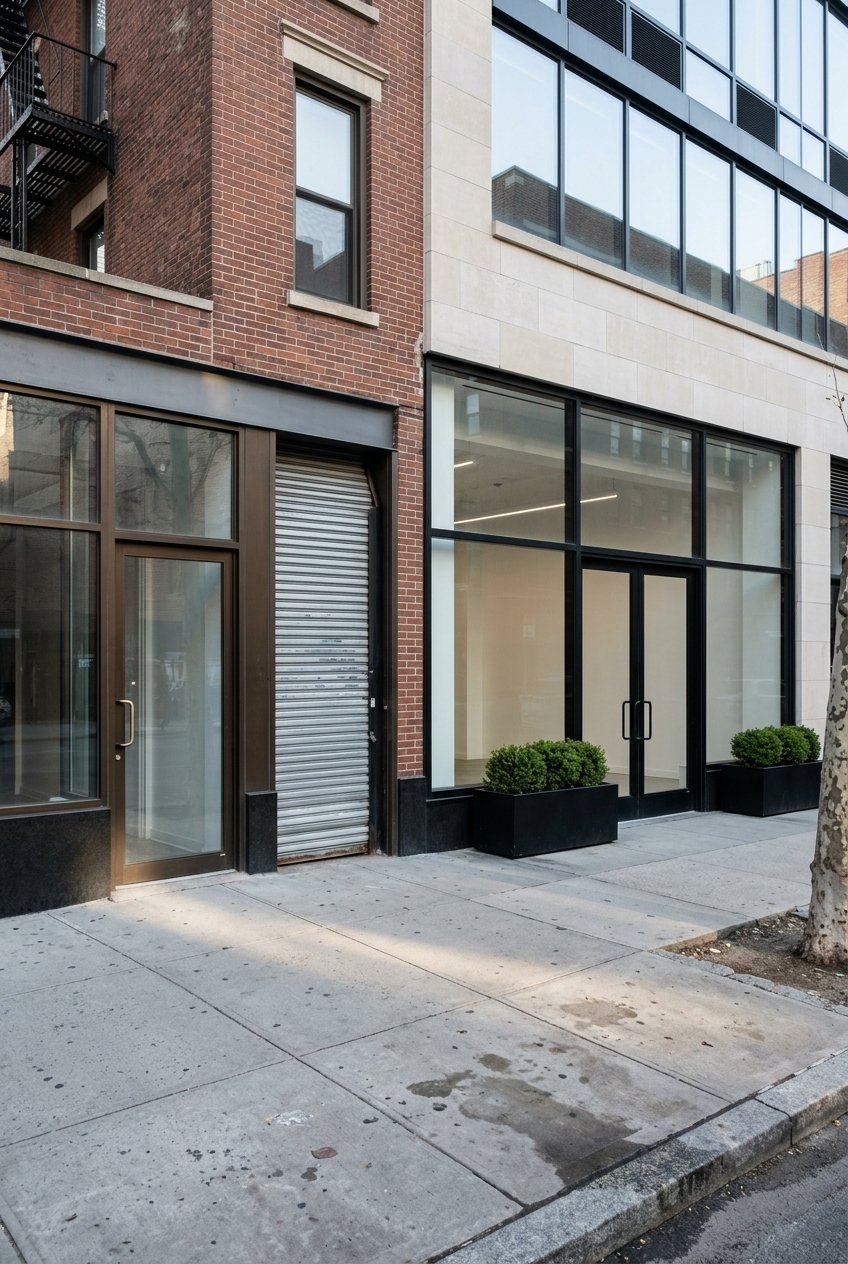
Are Manhattan’s avenues always better retail bets than side streets? Not even close. If you are evaluating a storefront, a retail condo, or a leasing strategy, the real question is not avenue versus street in the abstract. It is whether you are looking at a true flagship corridor, a premium side block, or a more neighborhood-driven location. This guide breaks down what the latest Manhattan retail data says about rents, availability, tenant demand, and fit so you can compare locations more clearly. Let’s dive in.
The Real Manhattan Comparison
In Manhattan, the cleanest comparison is flagship corridor versus secondary block, not simply avenue versus side street. That distinction matters because some avenues are global retail stages, while others function more like local or office-adjacent commercial corridors.
As of Q1 2026, overall Manhattan retail availability was 10.8%, which marked a record low, while average asking rents were up 2.0% year over year. That tells you the market is tight, but it is also highly selective. Demand is there, yet it is clustering in specific corridors and block faces rather than lifting every location equally.
REBNY reported that Times Square, Herald Square, the Financial District, and Upper Fifth Avenue accounted for roughly 60% of available storefronts in the corridors it tracked. At the same time, availability continued to tighten in SoHo, Madison Avenue, Flatiron, Lower Fifth Avenue, and the West Village. In plain terms, Manhattan retail strength is broad, but the biggest pricing power still sits in a relatively small group of blocks.
Avenue Rents Command the Trophy Premium
The best-known avenue corridors still carry the highest rents and the strongest brand-sensitive demand. These are the locations where the address itself often becomes part of the marketing strategy.
In Q1 2026, Fifth Avenue between 49th and 60th Streets averaged $2,447 per square foot with 14.5% availability. Madison Avenue between 57th and 72nd Streets averaged $881 per square foot with 10.5% availability. Times Square Bow Tie averaged $1,501 per square foot, while Herald Square/West 34th Street averaged $503 per square foot.
Those numbers show why not every avenue should be grouped together. Fifth Avenue operates in a very different pricing universe than many other Manhattan corridors. Even among major avenues, the spread is wide enough that the block can matter more than the street name alone.
Side Streets Can Outperform Weaker Avenues
A side street in the right district can beat a weaker avenue corridor by a meaningful margin. That is especially true in neighborhoods where shopping patterns are built around discovery, fashion density, and repeat foot traffic.
SoHo is the clearest example. In Q1 2026, the broad Broadway-to-West Broadway corridor averaged $374 per square foot with 9.6% availability. But within SoHo, Spring and Prince Streets were running at about 10% availability, and asking rents on those streets had reached as high as $750 and $832 per square foot in recent reporting.
Sales data reinforces that point. Cushman reported 113 Spring Street at $2,623 per square foot and 73 Wooster Street at $2,619 per square foot in Q1 2026 sales data. Those are premium side-street numbers, and they show how a top block in a strong retail district can perform at a very high level even without avenue frontage.
Weaker Corridors Underwrite Differently
At the same time, many neighborhood and office-adjacent corridors trade at much lower rent levels. That does not make them bad locations. It just means the strategy, tenant pool, and return profile are usually different.
In Q1 2026, Third Avenue averaged $268 per square foot. The Upper West Side averaged $296, Lower Manhattan averaged $204, and Meatpacking averaged $302. These figures make one thing clear: a side street in a strong district like SoHo can outperform a lower-tier avenue corridor.
The NYC Tax Commission’s 2024/2025 Manhattan retail use schedule supports the same idea. Its location bands show that rent assumptions can rise sharply in prime Midtown and Upper Midtown shopping areas while staying far lower in other parts of the borough. If you are underwriting a retail asset, exact location band matters materially.
Why Avenue Frontage Still Matters
Avenue frontage remains valuable because it delivers more than traffic. In Manhattan, it often signals stature, permanence, and category leadership.
JLL describes Fifth Avenue as the premier address for global luxury brands and Madison Avenue as a destination for legacy luxury. It also notes that corridor choice is a brand statement. That matters because some retailers are not just renting space. They are buying visibility, signaling market position, and placing themselves near specific competitors and customer groups.
For those tenants, the storefront itself is part of the brand message. High-street placement can help justify larger buildouts, flagship formats, and broader customer acquisition goals. That is a very different use case from a neighborhood shop that depends more on local frequency and operating efficiency.
Why Side Streets Keep Winning Tenants
Side streets work well when discovery, repeat visits, and district identity matter more than pure avenue exposure. In several Manhattan submarkets, that model is proving durable.
JLL points to SoHo as a place where digitally native brands build customer relationships, test physical retail, and gather market intelligence. Pop-ups are also used to test markets, maintain presence during relocations, or bridge into a permanent lease. That flexibility is one reason premium side-street blocks stay relevant.
Tenant mix also supports the case for side-street strength. Cushman reported that food and beverage accounted for 40.5% of 2025 leasing volume, apparel and accessories made up 21.6%, and health and wellness deals totaled 485,800 square feet in 2025. REBNY likewise said food and beverage, fitness and wellness, and fashion made up most leasing activity in the second half of 2025.
These are categories that often benefit from district energy, walkability, and repeat local traffic. In the right pocket, a side street can offer a strong combination of lower absolute rent, useful co-tenancy, and enough visibility to support growth.
Best Fit by Retail Strategy
If you are choosing between avenue frontage and a side-street location, the best answer usually comes down to your business model or your investment thesis.
Best fit for avenue locations
Avenue frontage is often strongest for:
- Luxury flagships
- High-credit brands that need a strong brand statement
- Experiential concepts tied to tourist and commuter traffic
- Retailers that want premier co-tenancy and broad recognition
These locations can command high rents because the upside is tied to visibility, prestige, and concentration of demand. They can also attract major capital commitments, including retailer acquisitions of key properties.
Best fit for side-street locations
Side streets are often better suited for:
- Contemporary fashion
- Beauty concepts
- Cafes and food-and-beverage users
- Fitness and wellness operators
- Boutique service businesses
- Emerging brands testing or refining a Manhattan presence
These uses often win on neighborhood frequency rather than destination traffic alone. In a tight district, they can still secure premium pricing, but the economics tend to be more grounded in repeat customers and local density.
What Investors Should Watch
For investors buying or selling ground-floor retail, the key lesson is simple: street label alone is not enough. You need to evaluate the exact block, the tenant profile, and the re-leasing story.
Trophy avenue frontage still carries a major premium. Cushman reported sales at 690 Madison Avenue for $6,943 per square foot and 717 Fifth Avenue for $7,826 per square foot. By comparison, premium SoHo side-street sales like 113 Spring Street and 73 Wooster Street were both around $2,620 per square foot.
These are not direct apples-to-apples comparisons, but they clearly show the valuation gap between trophy flagship frontage and even very strong side-street retail. They also show that a top side street can still support substantial value when the district is proven and tenant demand is deep.
Risk also differs by corridor type. Prime flagship corridors may offer strong pricing power when supply is scarce, but they often depend on a smaller pool of high-credit tenants with highly specific location requirements. Side-street assets usually underwrite more on neighborhood density and a broader tenant base.
Why Manhattan Retail Demand Is Still Expanding
Despite higher rents in top corridors, Manhattan continues to attract retailers and investors. The demand story is not just about prestige. It is also about scale and spending power.
Cushman reported 65.0 million visitors in 2025 and forecast 66.3 million for 2026. It also reported median household income at $111,200 in Q1 2026. Add commuter density and improving office activity, and you get the foundation for continued expansion in both flagship corridors and spillover blocks.
That backdrop helps explain why Manhattan leasing remained active even as availability tightened. It also helps explain why both major global brands and newer concepts are still competing for the right locations.
The Bottom Line on Side Street vs Avenue
If you are comparing Manhattan retail opportunities, avoid the shortcut of assuming avenue always beats side street. The strongest conclusion from current market data is more nuanced.
The best Fifth and Madison blocks still hold the true trophy premium. But some side streets, especially in SoHo, can outperform weaker avenues by a wide margin. In today’s market, the most important question is not whether the address is on a street or an avenue. It is whether the block matches your visibility needs, rent tolerance, customer pattern, and long-term leasing or investment goals.
If you are weighing a Manhattan retail acquisition, disposition, or tenant strategy, Asset CRG Advisors LLC can help you assess corridor strength, block-by-block pricing, and off-market opportunities with senior-led execution.
FAQs
Is every avenue retail location in Manhattan better than every side street?
- No. Q1 2026 data showed Third Avenue at $268 per square foot, while premium side streets in SoHo supported much higher asking rents and sales values.
Can a Manhattan side street still function like a flagship location?
- Yes. In SoHo, Spring and Prince Streets had about 10% availability and have supported premium asking rents, showing that select side streets can serve flagship-style roles.
Which Manhattan retail tenant categories are most active right now?
- Food and beverage, apparel and accessories, fitness, wellness, and other experiential concepts were among the most active categories in 2025 leasing.
Why do retailers keep expanding in Manhattan despite higher rents?
- Strong visitor volume, commuter density, office activity, and household income continue to support demand across key Manhattan retail corridors.
What matters more for Manhattan retail underwriting: avenue versus side street or exact block?
- Exact block matters more. Current rent and sales data show wide differences within both avenues and side streets, so corridor quality and tenant fit are more important than the label alone.