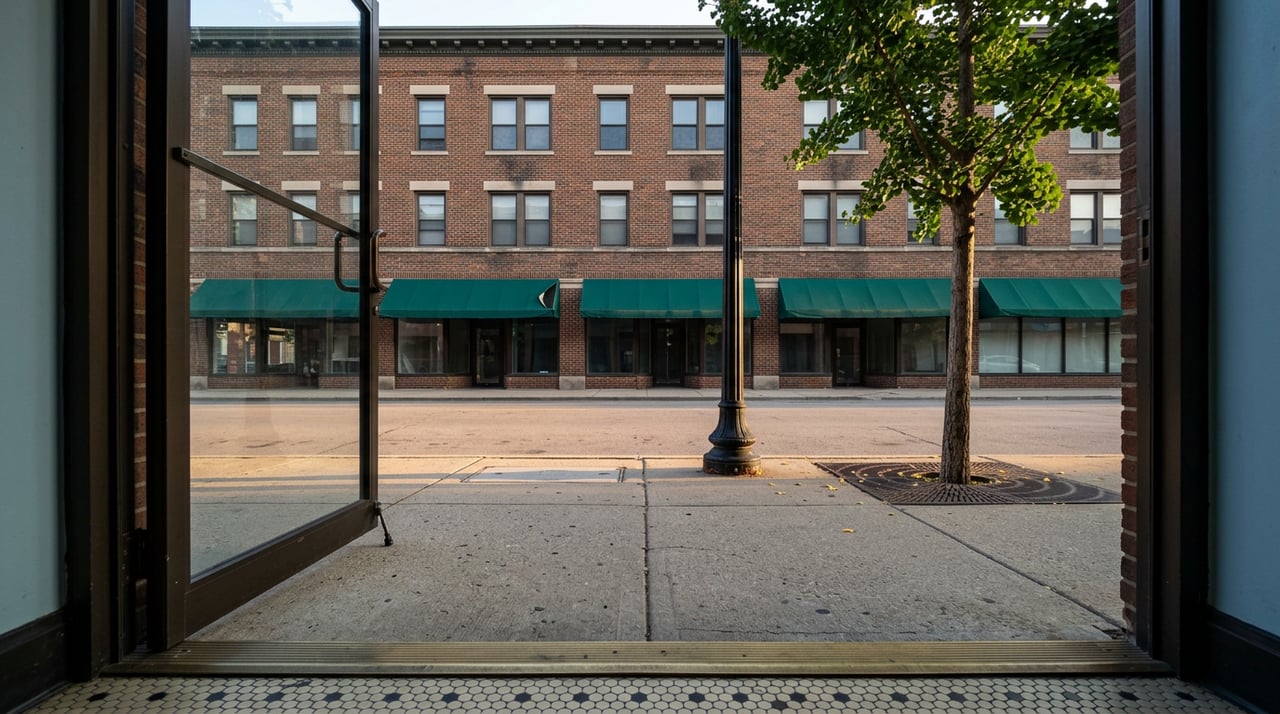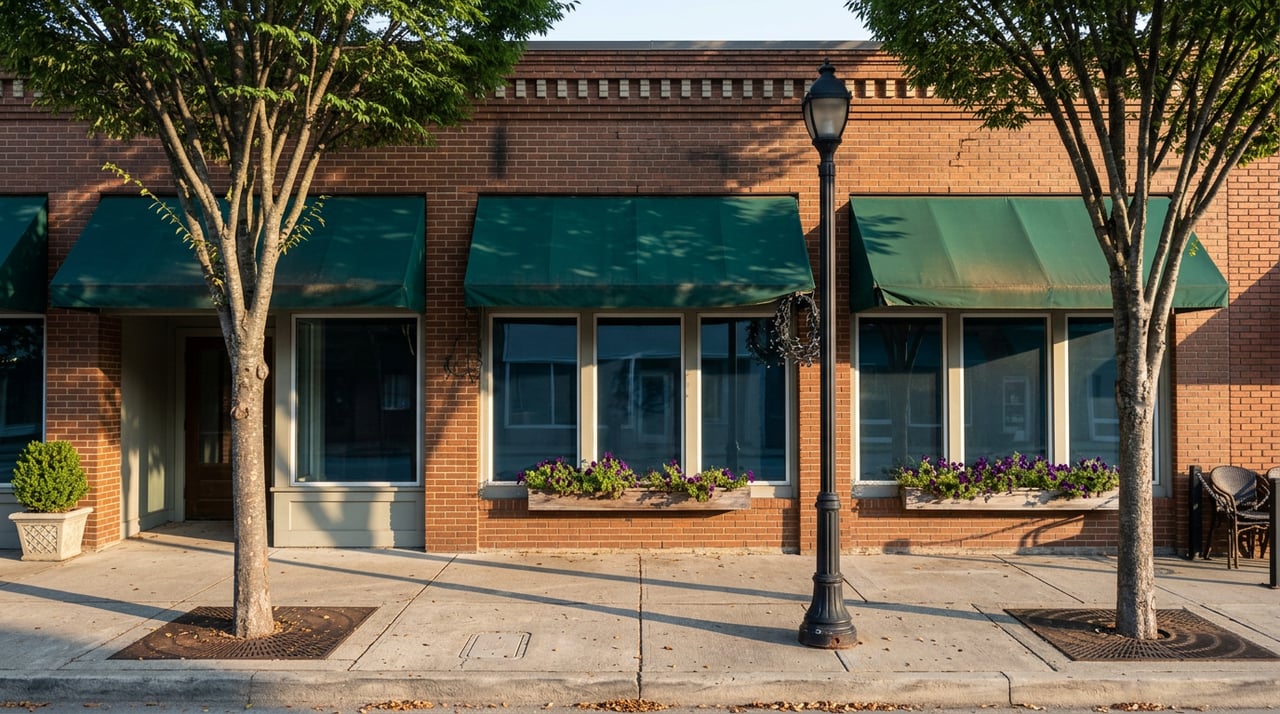
Walk down Richmond Terrace on a Friday night this summer and you'll hit a wall of noise before you hit the water: a sold-out concert bleeding out of Snug Harbor, cheers rolling off SIUH Community Park after a FerryHawks home run, a line for the ferry that wraps twice around the terminal plaza. Keep walking past all of it and you'll reach Empire Outlets, the 350,000-square-foot retail complex the city built specifically to be the reason people come to this waterfront. Half its storefronts are dark.
That gap between what's actually pulling crowds to the North Shore and what was supposed to is the story of this season, and it's a story only someone paying attention to both the calendar and the empty leases would notice.
The Anchor That Never Held
Empire Outlets opened on May 15, 2019, with plans for as many as 100 designer stores across its plaza and food deck. The site only ever had room for about 70. By that November, just thirty were operating. Nordstrom Rack, one of the complex's anchor tenants, announced its exit in 2024, and by the time the mall went into foreclosure the numbers told a blunt story: it owed $38 million to Sterling National Bank and $174 million to Goldman Sachs' Urban Investment Group, and it was still roughly 60 percent vacant when it sold at auction for $10 million in September 2023.
None of that is a knock on the location. Empire Outlets sits closer to the Staten Island Ferry Terminal than almost any commercial address in the borough. It's the retail model, not the address, that didn't hold.
The City Has Stopped Trying to Save It as Retail
Here's the part most North Shore residents haven't fully clocked: the city has quietly given up on turning Empire Outlets back into a shopping destination. In June 2025, the NYC Economic Development Corporation began a new planning process for both Empire Outlets and the former New York Wheel site next door. By November, NYCEDC, City Council Member Kamillah Hanks, and Borough President Vito Fossella had unveiled a new vision that leans on the city's Staten Island North Shore Action Plan and points toward housing, open space, and neighborhood-serving stores rather than another outlet mall.
Getting there requires a formal rezoning, and NYCEDC says it will keep engaging Staten Islanders on that question through the rest of 2026. So the empty storefronts you walk past this summer aren't waiting for a new leasing broker. They're waiting for a zoning vote.
What's Actually Filling the Waterfront Right Now
While that process plays out on a city timeline, the North Shore's actual summer has been running on a completely different set of venues:
SIUH Community Park, the ballpark formerly known as Richmond County Bank Ballpark, is home to the Staten Island FerryHawks under new manager Carlos Mirabal for the 2026 season. On June 28, the FerryHawks closed out a six-game series against the Long Island Ducks with a lopsided 17-3 loss, the kind of head-to-head series that still pulls a crowd to a 7,000-seat bowl on a weeknight. Single-game tickets start around $12, with an average closer to $51, a fraction of what a Yankees or Mets night costs across the harbor.
Snug Harbor Cultural Center and Botanical Garden kept its free outdoor programming running this summer, including an August 9 concert from the Bobby Sanabria Multiverse Big Band with Charlie Aponte and Judy Santos, and a Shakespeare in the Park giveaway for a staging of The Winter's Tale set for August 22.
Maker Park Radio's Future Roots Festival brought a live DJ night with food and beverage vendors to Stapleton on June 20, kicking off a summer of Saturday programming at Maker Park.
Earlier this summer, the waterfront hosted an official 2026 World Cup Fan Zone steps from the ferry terminal, drawing crowds for live match broadcasts against a Lower Manhattan skyline backdrop, a level of global programming this stretch of shoreline had never carried before.
St. George Theatre, which has been running continuously since its opening night on December 4, 1929, is 97 years into that run this year. Its 2026 slate mixes nostalgia (sing-along screenings of Aladdin and The Little Mermaid under its "Better on the Big Screen" series) with national names on the fall calendar, including Eddie Griffin on September 18 and George Lopez on October 9. The theater is also running a 2:1 matching-donation campaign through the Staten Island Foundation as it heads toward its centennial.
None of this needed Empire Outlets to happen. None of it depended on foot traffic from the mall, either. The ballpark, the theater, and Snug Harbor were all doing their own programming independent of whatever storefronts sat empty two blocks away.
Why an Empty Mall and a Full Calendar Are the Same Story
It would be easy to read the Empire Outlets situation as bad news for the neighborhood and the concert calendar as good news, as if they're unrelated. They're not. They're the same data point read two ways.
The mall was built on the assumption that Staten Island's waterfront needed an imported retail draw, something that would pull tourists off the ferry and into a shopping plaza before they ever saw the rest of the borough. The assumption turned out to be wrong. What actually pulls a crowd to this stretch of shoreline is programming rooted in the place itself: a minor-league team with its own home ballpark, a 97-year-old theater with deep community ties, a botanical garden hosting free jazz on a summer weekend. The city's own rezoning pivot toward housing and neighborhood-serving retail is essentially an admission of the same thing residents have been proving all summer by showing up to everything except the mall.
That distinction matters for anyone trying to read what's actually happening to this part of Staten Island, separate from the headline vacancy numbers. A half-empty retail complex sitting on some of the most valuable waterfront acreage in the borough isn't a sign the North Shore has lost its pull. It's a sign the pull was never coming from that building in the first place, and the city planning apparatus has finally caught up to what a FerryHawks Tuesday night crowd already knew.
What to Watch Through the Rest of 2026
If you live here, the practical takeaway isn't complicated: don't plan your fall around Empire Outlets reopening as a mall, because it probably won't. Plan around the FerryHawks' remaining home schedule, St. George Theatre's fall lineup, and whatever Snug Harbor books next, because those are the venues actually setting the pace of life on this waterfront right now. And if you're curious about the rezoning conversation itself, NYCEDC's public engagement process runs through the rest of the year, which means the shape of that site, housing, open space, ground-floor retail, or something else entirely, is still being decided by the people who show up to weigh in.
That's the North Shore's real story this season. Not a mall waiting for better tenants, but a waterfront that already found its audience without one.
Asset CRG tracks these shifts in Queens, Brooklyn, and across the boroughs because they shape what a corridor is worth long before a zoning vote makes it official. If you own property near a changing waterfront, or you're weighing whether a corridor like this one fits your next acquisition, Asset CRG can walk you through what the data actually supports. Request a Property Valuation & Off-Market Access to see where your next opportunity might be hiding.