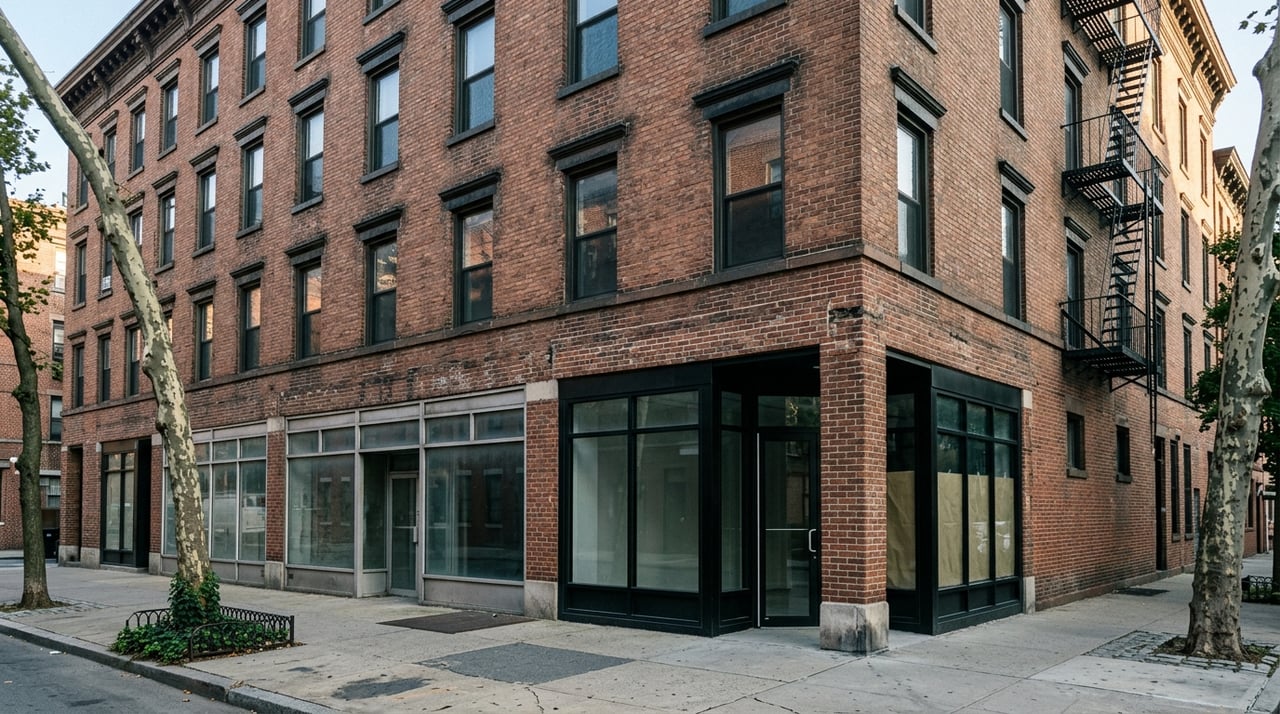
Brooklyn’s mixed-use corridors are not moving in one direction. Some blocks are attracting stronger rents, new brands, and investor demand, while others are still working through vacancy, turnover, and changing storefront needs. If you own, lease, or invest along these corridors, understanding what is actually changing can help you make better decisions. Let’s dive in.
Why Brooklyn corridors feel so different
Brooklyn’s mixed-use market is resilient, but it is highly local. The NYC Comptroller reported citywide storefront vacancy at 11.0% as of April 15, 2026, with about 15,700 vacant storefronts. Just as important, vacancies tend to cluster, and a storefront within one block of a vacancy is 30% more likely to be vacant.
That pattern helps explain why one stretch of a corridor can feel active while the next block feels soft. It also means broad borough headlines can miss what matters most on the ground. In Brooklyn, corridor analysis is increasingly block by block.
Northern Brooklyn remains a persistent vacancy hotspot, according to the Comptroller. At the same time, REBNY’s H1 2025 Brooklyn retail report found that average asking rent rose or held steady in 10 of 16 surveyed corridors. The strongest gains were reported on Washington Street in DUMBO, Fulton Street in Downtown Brooklyn, and North 6th Street in Williamsburg.
Small storefronts still shape the market
One of the clearest trends is size. Across 17 major Brooklyn corridors, about 80% of available storefronts were 2,500 square feet or less. That keeps the market active for smaller users like coffee shops and boutiques, which continue to lease space across the borough.
Larger spaces are a different story. They are harder to find, and when they do come available, they tend to fit uses like grocery, health care, education, and fitness better than smaller format retailers. According to the Brooklyn Chamber’s 2024 snapshot, larger footprints over 5,000 square feet are most likely in Downtown Brooklyn and Bay Ridge, often in former department stores, banks, or pharmacies.
That matters because not every corridor can support the same tenant mix. Some avenues work best for daily-needs businesses that serve nearby residents. Others are better candidates for repositioning or destination retail, depending on storefront size, foot traffic, and the surrounding housing base.
Corridor type matters more than ever
Mixed-use corridors are not interchangeable, even when they are only a short distance apart. NYC Planning describes Atlantic Avenue in East New York as largely auto-oriented and semi-industrial. By contrast, Fulton Street is described as an active local shopping corridor with small stores at grade and housing above, while Pitkin Avenue functions as a transit corridor where some storefronts have been converted to residential use.
Those differences shape what can work on each block. A corridor with steady residential density and small storefronts may support convenience retail and neighborhood services. A wider, more auto-oriented corridor may require a different leasing strategy or a longer-term repositioning plan.
Even with vacancy concerns, turnover does not automatically mean a loss of local business character. The NYC Comptroller found that 84% of small-business storefronts operating at the start of 2020 are still operating today or were replaced by another small business. That suggests the market is adjusting, not simply giving way to one uniform tenant type.
Investor demand is favoring stability
Investors are still active in Brooklyn mixed-use, but they are being selective. Matthews reported that Brooklyn mixed-use generated $488 million across 163 transactions in the first half of 2025. The strongest demand centered on stabilized, well-located assets with more resilient rent rolls.
Pricing reflects that preference. Matthews found that buildings with fewer than six residential units traded at about a 40% premium on a price-per-foot basis compared with larger regulated buildings. The same report noted that buyers typically underwrite the retail portion at a higher cap rate because of vacancy and credit-loss risk.
RM Friedland reached a similar conclusion in its mid-2025 report, pointing to multi-year high pricing for mixed-use properties that offered stable income and favorable zoning. In today’s market, buyers are clearly separating predictable cash flow from corridors or assets that require more repositioning work.
Brooklyn pricing shows a wide corridor gap
If you are looking at value across Brooklyn, the spread is significant. TerraCRG’s 2024 neighborhood-level sale data showed selected mixed-use pricing from about $413 per square foot in Bed-Stuy to about $1,925 per square foot in Williamsburg. Greenpoint came in around $1,331 per square foot, Park Slope around $1,667, Downtown Brooklyn around $666, and Bushwick around $482.
That range tells you something important. Borough-wide demand is real, but corridor quality, redevelopment context, and transit access often have just as much influence on value. Two assets in the same borough, or even the same neighborhood, can trade on very different assumptions.
Retail asking rents also show the same split. REBNY and Commercial Observer reported that asking rents remain below peak in nearly all submarkets, but stronger corridors are roughly in the $300 to $400 per square foot range while some others remain below $200. The result is a market where selectivity and local knowledge matter more than broad optimism.
Downtown Brooklyn has housing-led momentum
Downtown Brooklyn and Fulton Street stand out because new housing is feeding new retail demand. The Downtown Brooklyn Partnership says the area has added more than 27,000 housing units since the 2004 rezoning and expects another 5,000 in 2025. REBNY also reported that Brooklyn accounted for 35% of the city’s multifamily completions over the last five years, while Downtown Brooklyn’s population grew 16% from 2018 to 2022.
That growth is not just a housing story. It supports a larger customer base for ground-floor retail and service businesses. The city also completed an $8 million Fulton Mall streetscape project as part of a broader $40 million public-realm effort in Downtown Brooklyn, which should support pedestrian activity and long-term retail persistence.
For owners and investors, this is one of the clearest examples of how mixed-use corridors evolve when housing, streetscape investment, and retail demand move together. Corridors with growing residential density often gain a stronger foundation for neighborhood-serving retail over time.
Atlantic Avenue is a long-term repositioning play
Atlantic Avenue between Vanderbilt and Nostrand may be the clearest long-horizon repositioning story in central Brooklyn. The Atlantic Avenue Mixed Use Plan is expected to deliver 4,600 new homes, about 1,900 affordable units, plus community investments and infrastructure improvements along the corridor.
This matters because corridor change often follows the housing pipeline. As new homes come online, retail demand can broaden, tenant expectations can shift, and underused sites can become more attractive. For mixed-use owners, that can change how a property is leased, marketed, or valued over time.
The City of Yes for Housing Opportunity also re-legalizes two-, three-, and four-story housing above commercial ground floors in many locations. Over time, that policy should help deepen Brooklyn’s mixed-use fabric and reinforce the role of commercial corridors as places where housing and retail support each other.
Williamsburg shows the premium corridor model
If Downtown Brooklyn is the housing-led story, Williamsburg’s North 6th Street is the premium brand story. REBNY said North 6th Street reached a new peak average asking rent in H1 2025 and continues to attract top domestic and international fashion brands.
Recent leasing activity on or near the corridor includes names such as Abercrombie & Fitch, Lululemon, Mejuri, Wally, HOKA, and Tecovas. That does not mean every Williamsburg block performs at the same level, but it does show how a corridor can strengthen when foot traffic, retail identity, and limited availability align.
For landlords and tenants, this is a reminder that premium corridors often behave differently from mature local-service strips. They can support higher rents, but they also require a sharper understanding of brand fit, storefront quality, and timing.
Mature corridors still matter, with more selectivity
Brooklyn’s established local-service strips still play an important role. Court Street, Fifth Avenue, 86th Street, Flatbush Avenue, and Smith Street continue to matter, but they now require more selective underwriting. The Brooklyn Chamber’s 2024 survey showed stronger rent momentum on Bedford Avenue, Seventh Avenue, and North 6th Street, while Court Street, Fulton Street, 86th Street, Fifth Avenue, Flatbush Avenue, and Smith Street were down.
That does not make these corridors weak across the board. It means results depend more heavily on the specific block, storefront size, nearby competition, and surrounding demand drivers. In practical terms, the same corridor may present one opportunity for a daily-needs tenant and a very different outlook for a destination concept.
This is also where larger-format availability matters. REBNY noted that the largest available storefronts are concentrated in Downtown Brooklyn and Bay Ridge, which helps explain why those corridors can be a better fit for grocery, medical, education, and fitness users than for pure destination retail.
What this means for owners and investors
The biggest takeaway is simple: Brooklyn mixed-use corridors are evolving through a mix of vacancy clustering, storefront size, housing growth, and selective investor demand. No single metric tells the full story. You need to know what kind of corridor you are looking at, what kind of space it offers, and what demand drivers are building around it.
If you own a mixed-use building, this environment rewards a realistic view of your block and your tenant mix. If you are an investor, pricing and risk can vary sharply based on corridor quality and stability. If you are a retailer, right-sizing your location strategy matters as much as choosing the right neighborhood.
That is why local, block-level analysis has become so important in Brooklyn. The best opportunities are often clear only when you look closely at housing pipeline, vacancy patterns, retail format, and the corridor’s long-term role in the neighborhood.
If you are evaluating a Brooklyn mixed-use asset, planning a disposition, or looking for on- and off-market opportunities, Asset CRG Advisors LLC can help you navigate the corridor-level details with senior-led, neighborhood-focused guidance.
FAQs
How are Brooklyn mixed-use corridors changing in 2026?
- Brooklyn mixed-use corridors are changing through a mix of clustered storefront vacancy, strong demand for smaller spaces, selective investor interest in stabilized assets, and housing-led growth in corridors like Downtown Brooklyn and parts of Atlantic Avenue.
Why do some Brooklyn retail corridors perform better than others?
- Performance varies by block because corridor type, storefront size, transit access, nearby housing growth, and vacancy clustering all affect leasing demand, rents, and long-term value.
What storefront sizes are most common in Brooklyn corridors?
- About 80% of available storefronts across 17 major Brooklyn corridors are 2,500 square feet or less, which supports active demand from smaller-format users like coffee shops and boutiques.
Which Brooklyn corridors show the strongest mixed-use momentum?
- Recent data points to strong momentum in places like Fulton Street in Downtown Brooklyn, Washington Street in DUMBO, and North 6th Street in Williamsburg, though each corridor is driven by different demand factors.
Why does housing growth matter for Brooklyn retail corridors?
- New housing can expand the local customer base for ground-floor businesses, which is why areas with major residential growth and public-realm improvements often show stronger long-term support for mixed-use retail.
What should you look at before buying a Brooklyn mixed-use property?
- Key factors include the exact block, storefront size, nearby vacancy patterns, transit access, current tenant stability, housing pipeline, and whether the corridor supports daily-needs retail or more destination-oriented users over time.