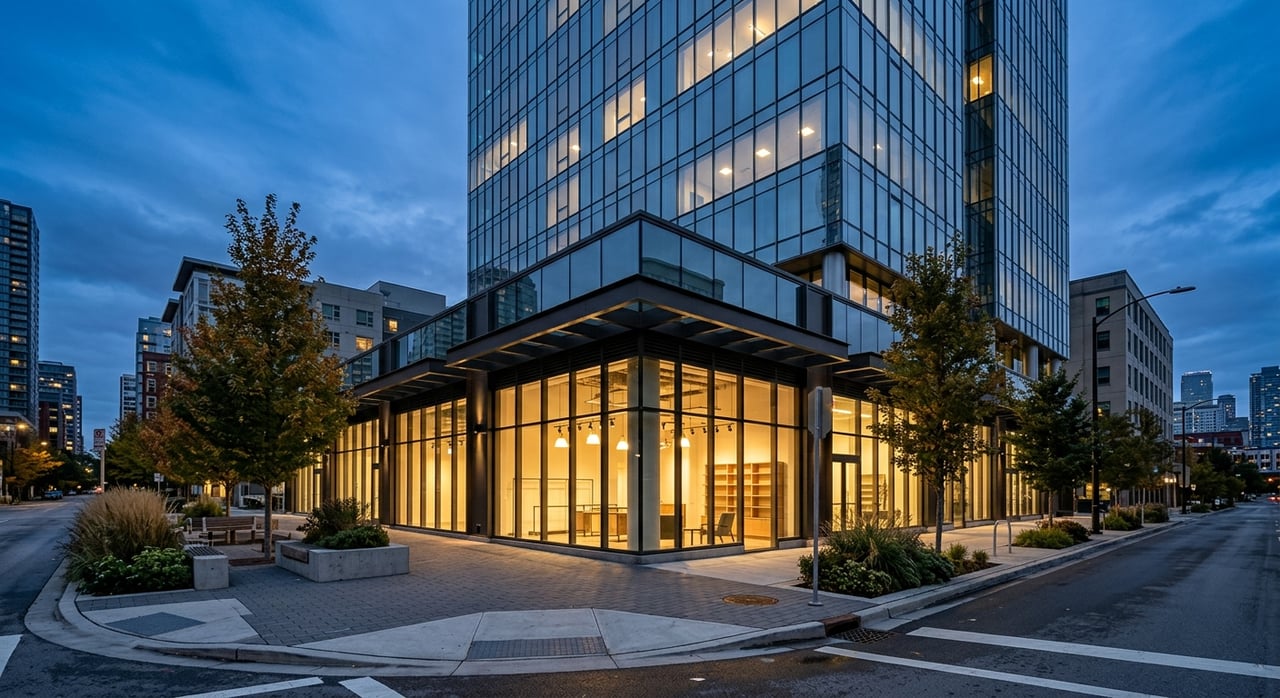
If you are an NYC brand looking across the Hudson for your next store, the real question is not simply New Jersey or not. It is which kind of New Jersey retail strategy fits your concept best. For many brands, the choice comes down to the Hudson waterfront in places like Newport versus inner New Jersey destinations such as Short Hills, Hackensack, or Wayne. This guide breaks down the tradeoffs in plain terms so you can match your format, customer mission, and site needs to the right market. Let’s dive in.
Why this comparison matters
For New York-based brands, New Jersey can offer meaningful expansion opportunity without losing connection to the metro customer base. But not all submarkets function the same way, even when they sit within the same broader region.
The Hudson waterfront, especially Newport and the Jersey City waterfront, behaves like a dense urban extension of New York. Inner New Jersey is more varied and often more suburban in how customers arrive, shop, and spend. That difference affects everything from your footprint to your rent tolerance.
Hudson waterfront retail at a glance
The waterfront story starts with density, transit, and everyday convenience. According to U.S. Census QuickFacts for Jersey City, Jersey City reached 302,824 residents in July 2024, with density of 19,835.1 people per square mile, median household income of $97,710, and 54.8% of adults holding a bachelor’s degree or higher.
At the county level, Hudson County data adds more context. The county had 736,185 residents, density of 15,938.2 people per square mile, median household income of $91,795, and 56.5% of residents speaking a language other than English at home.
That profile supports retail formats that benefit from frequency, visibility, and transit-linked demand. Think smaller footprints, convenience-driven shopping, and concepts that can serve residents, office users, and commuters in the same day.
Newport stands out as a commuter node
Newport is one of the clearest examples of waterfront retail logic. Newport Centre positions itself in the heart of the Newport Hudson Waterfront community and highlights access from the Holland Tunnel, Hudson-Bergen Light Rail, PATH, and NJ Transit buses.
The commuter story is backed by traffic counts. According to the Port Authority figures cited in the research, Newport averaged 13,393 weekday entries and 14,753 weekday exits in October 2025, reinforcing its role as a meaningful transit stop for daily movement.
Waterfront demand is supported by local spending
Hudson County is not just dense. It also supports active retail demand. According to the Hudson County labor market facts, the county has an average household size of 2.38, median age of 36.7, and a private-sector wage of $97,453, with finance and insurance as the largest industry.
Jersey City alone generated $3.98 billion in retail sales in 2022 and posted $13,729 in retail sales per capita. For brands evaluating market depth, that is an important signal that the trade area is active, not just densely populated.
Inner New Jersey retail at a glance
Inner New Jersey is not one single retail type. Bergen, Morris, and Passaic Counties each support different customer profiles, spending patterns, and retail formats.
According to New Jersey labor market county data, Bergen County had 978,641 residents, density of 4,200 people per square mile, median age 42.0, and per capita income of $102,229. Morris County was more suburban still, with 523,053 residents, density of 1,136.6, and per capita income of $115,850. Passaic County offered a denser but more value-oriented profile, with per capita income of $60,002.
For expansion teams, this usually means inland New Jersey gives you a wider spread of formats and price points. You may find stronger alignment for larger stores, destination shopping, weekend-driven traffic, or concepts that rely on easier parking and longer dwell time.
Inland centers are more parking-driven
The access model inland is very different from Newport. The Mall at Short Hills emphasizes car access, valet parking, EV charging, and transit connections through NJ Transit bus and rail links.
Other major centers follow similar logic. The Shops at Riverside highlights access tied to the George Washington Bridge and Route 4, while Willowbrook in Wayne markets itself as a seven-day destination with more than 170 shopping and dining choices. These are not commuter-first environments. They are destination-first environments.
Transit versus parking
For many NYC brands, this is the most important filter.
If your customer is likely to stop in on the way home, between meetings, or as part of a daily routine, the Hudson waterfront has a strong advantage. Newport’s direct link to PATH, light rail, buses, and nearby road access helps brands capture both resident and commuter traffic in a compact urban setting.
If your concept depends on customers driving in, carrying larger baskets, or making a planned shopping trip, inner New Jersey may be the better fit. Centers there tend to work best for brands that need convenient parking, easier loading, or a more deliberate destination experience.
Rent and vacancy tell an important story
Supply conditions in northern New Jersey remain tight, but Hudson County stands out even within that context. According to the IPA Northern New Jersey Retail Market Report, the regional retail vacancy rate was 3.3% in mid-2024, while Hudson County sat at 2.0%.
The same report noted average asking rent of $28.00 per square foot over the prior 12 months, projected to rise to $28.54 by December 2024. It also stated that Hudson County had the highest payment level among counties and average asking rent roughly 20% above the 2019 level.
A later 3Q25 update cited in the research pushed that point further. Hudson County vacancy fell to 1.7%, the lowest nationally among submarkets with more than 20 million square feet of inventory.
What that means for brands
Tight vacancy often creates both opportunity and pressure. In practical terms, waterfront retail can offer very strong positioning, but you may need to move decisively and accept less flexibility on space size or economics.
Inner New Jersey may offer more format-specific options depending on the center, parcel, and tenant mix. For some brands, that can translate into a more tailored site plan, especially when parking and footprint matter more than transit adjacency.
Co-tenancy shapes the customer mission
Retail is not just about who lives nearby. It is also about who shops next door.
At Newport Centre, co-tenancy reflects a mixed-use urban pattern. Simon lists JCPenney, Kohl’s, Macy’s, and upcoming Dick’s House of Sport and Primark, while the broader Newport directory includes Target, Morton Williams, Starbucks, Ruth’s Chris Steak House, Cheesecake Factory, TD Bank, and other daily-needs and dining uses.
That mix matters because it supports multiple shopping missions in one place. A customer might stop for groceries, dining, banking, or general merchandise in the same trip, which can be helpful for brands that rely on recurring visits and broad daily exposure.
Inland co-tenancy is more segmented
Inland centers often have a more defined identity. The Mall at Short Hills is positioned as a luxury destination with more than 150 stores and brands including Gucci, Louis Vuitton, Nordstrom, Neiman Marcus, and Apple.
The Shops at Riverside and Willowbrook reflect different destination models again, with tenant mixes built around regional draw rather than commuter convenience. If your brand is prestige-led, experience-driven, or dependent on longer planned visits, inland centers may provide a better setting.
Residential growth supports waterfront demand
The Hudson waterfront story is also supported by housing growth. According to the Hudson County facts report, Hudson County issued 5,310 residential building permits in 2024.
That compares with 3,488 in Bergen and 2,357 in Morris. For retail occupiers, that suggests waterfront demand is not only tied to commuters. It is also tied to a growing local household base that can keep supporting convenience-oriented retail over time.
Which market fits your brand?
There is no universal winner between the Hudson waterfront and inner New Jersey. The better market is the one that matches how your customers actually shop.
Here is a simple way to think about it:
| If your brand needs... | Hudson waterfront may fit better | Inner New Jersey may fit better |
|---|---|---|
| Daily traffic and frequent visits | Yes | Sometimes |
| Transit adjacency | Yes | Less often |
| Parking-led access | Less often | Yes |
| Smaller urban footprint | Yes | Sometimes |
| Larger box or broader layout | Less often | Yes |
| Commuter capture | Yes | Less often |
| Destination shopping mission | Sometimes | Yes |
| Prestige or regional-fill strategy | Sometimes | Yes |
A practical framework for site selection
When you compare Newport with inland New Jersey options, avoid reducing the decision to rent alone. A lower or higher occupancy cost only tells part of the story.
Instead, focus on these five questions:
- How does your customer arrive? By PATH, light rail, bus, or car?
- What is the shopping mission? Convenience stop, planned purchase, or destination trip?
- How much space do you actually need? Compact footprint or larger box?
- What kind of neighbors help you most? Daily-needs co-tenancy or prestige anchors?
- What matters more for your model? Weekday commuter flow or weekend destination traffic?
For many NYC brands, Newport works best when the goal is to stay close to Manhattan-adjacent demand while tapping Jersey City density and transit movement. Inner New Jersey tends to work better when the concept needs parking, scale, or a more intentional destination visit.
Final takeaway for NYC brands
If you are choosing between the Hudson waterfront and inner New Jersey, think in terms of shopping behavior, not state lines. Newport and the Jersey City waterfront can be a strong fit for commuter-linked, convenience-focused, mixed-use retail strategies. Inland New Jersey can be a stronger fit for destination retail, larger footprints, and parking-oriented customer patterns.
The smartest expansion plans start with a clear view of trade area function, co-tenancy, and customer mission. If you want a senior-led perspective on retail positioning, site strategy, or off-market opportunities in the broader New York region, connect with Asset CRG Advisors LLC.
FAQs
What makes Newport retail different from inner New Jersey retail for NYC brands?
- Newport is more transit-linked and urban, while inner New Jersey locations are often more parking-driven and destination-oriented.
Is Hudson waterfront retail better for commuter-focused store formats?
- Yes. Based on the research, waterfront sites like Newport are strongest when a brand wants weekday commuter traffic, dense residential capture, and smaller-footprint convenience.
Are rents and vacancy tighter in Hudson County retail markets?
- Yes. The cited IPA report shows Hudson County had lower vacancy than the broader northern New Jersey market and some of the strongest rent growth conditions in the region.
Which New Jersey retail markets fit larger-format NYC brands?
- Inner New Jersey markets are often a better fit for larger footprints, easier parking, and destination-led shopping patterns.
Why does co-tenancy matter when comparing Newport and inland malls?
- Co-tenancy helps shape the customer mission. Newport combines daily-needs, dining, and anchor retail, while inland centers often have more segmented luxury or destination-focused mixes.