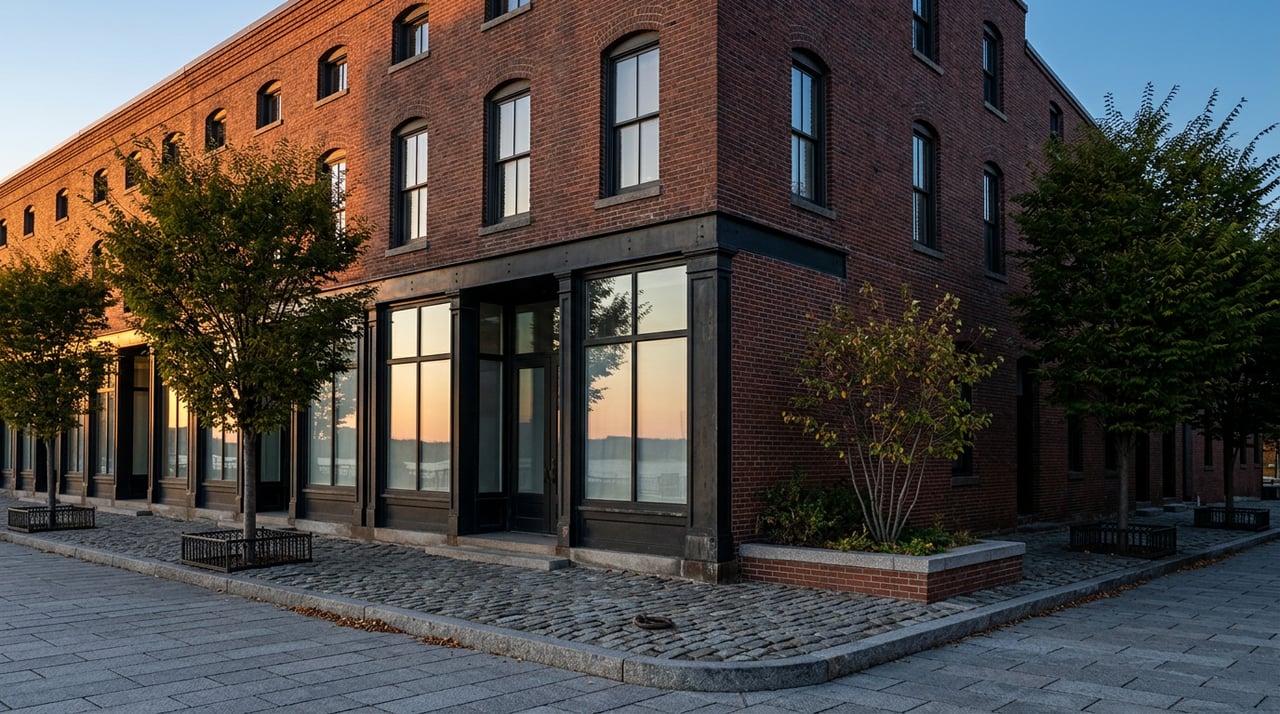
Walk into Wylie's on the corner of 29th Street and ask how long the owners have lived in Astoria, and you won't hear an origin story about scouting the neighborhood or running the numbers on foot traffic. Katz, Reis, and Mark had already worked in hospitality for about as long as they'd lived here. They'd talked for years about opening a bar together. Then one of them was eating across the street from the old Sparrow Tavern space, saw the landlord standing outside, and walked over. They signed the lease a few weeks later. The Sparrow Tavern had held that corner since 2005 and closed for good in late 2024, and by the end of 2025 it had become Wylie's, run by three people who never had to learn the block because they already lived on it.
That detail matters more than it looks like it should, because it's the same story repeating across Steinway Street and Ditmars Boulevard this year. The restaurant wave everyone's noticing right now isn't outside capital discovering Astoria. It's Astoria's own food and beverage economy moving sideways, from one storefront to the next, mostly run by people who were already here.
Every Name on the List Has Been Here Before
Look past the "new opening" headline on almost every recent addition and you find the same pattern: a business that already had a foothold somewhere in Queens or Brooklyn, using an Astoria vacancy to add a second, third, or fourth location rather than a first.
| New to the block | Where it came from |
|---|---|
| Freddy's Pizza | Expansion of the original Whitestone pizzeria that opened in 1961 |
| Gyro City | Second location overall, following the brand's original Brooklyn shop |
| Omwok | Third location overall, after starting out in Jackson Heights |
| Brooklyn Bread Cafe | Fourth citywide location for the bakery-cafe brand |
| Burmese Bites | Moved from a Queens Center Mall food court stall in Elmhurst, after building a following at Queens Night Market, into a brick-and-mortar storefront |
None of these are speculative bets by outsiders trying to catch a wave. They're operators who already proved a concept somewhere else in the city and picked Astoria as the next stop because the customer base, the foot traffic pattern, and the rent math already made sense to them. Freddy's didn't need to build brand awareness from zero. Neither did Gyro City, which is counting on the same crowd that made its Brooklyn location work.
That's a different growth story than the one most neighborhood roundups tell. It's not "Astoria is hot, everyone's moving in." It's "the people who already understood Astoria's food economy are consolidating their bets inside it."
The Storefronts That Actually Changed Hands
Not every opening fits that mold, and the exceptions are worth naming because they show where genuine turnover is happening. Sangria Tapas Bar & Restaurant took over the space that Shady Lady occupied before it closed permanently, bringing tapas like pulpo a la plancha alongside a sangria-forward drink list to a corner that used to serve something else entirely. Barkada Social Club opened with Filipino food built for sharing, the kind of menu that reads like it's daring you to order a quiet dinner and then doesn't let you. Mrs. Georgia brought Georgian cooking, khachapuri and khinkali, into a storefront that didn't have anything like it before. Morjan Seafood opened as a halal seafood spot with branzino and fresh clams.
These four are the actual new entries, concepts that didn't exist in Astoria in this form before this year. But notice where they're opening: into occupied retail corridors with existing sidewalk traffic, not into some undiscovered edge of the neighborhood. Even the genuinely new restaurants are betting on blocks that already work, not blocks that need to be proven.
Why Ditmars Needed a Restaurant Week in the First Place
Ditmars Boulevard calls itself Astoria's Restaurant Row for a reason. HinoMaru Ramen has held a Michelin Bib Gourmand for eight consecutive years since opening in 2011. Forno Siciliano has been serving veal parmigiana and wood-fired pizza for more than three decades. Barranco and Loukoumi Taverna round out a strip that looks, on paper, like it should sell itself.
It doesn't, and the Astoria-Ditmars Restaurant Week exists because of that gap. Chad Goldsmith, who owns Tootles & French on Ditmars, organized the first edition in 2025 specifically to reverse a drop in foot traffic along the corridor that he traces back to the pandemic. "One of the hardest things was making people know we exist," he said of opening his own restaurant in 2023, and the event he built runs on that same problem: a strip of genuinely good, often decades-old restaurants that still struggle to pull people two blocks off the subway. The 2026 edition ran April 13 through April 26, with special menus at 32 participating restaurants, bars, and food carts, a scale that suggests the corridor's foot traffic problem is real enough that three dozen businesses signed up to fight it together rather than compete for the same diners individually.
If Restaurant Week follows the pattern it set in its first two years, expect it to return again next spring. But the fact that it needs to exist at all tells you something the "vibrant dining scene" framing usually skips: even a nationally recognized restaurant row has to manufacture reasons for people to show up.
Steinway Runs a Different Playbook
A few blocks over, Steinway Street is solving a version of the same problem with a different tool. The Steinway Astoria Partnership, the business improvement district that's managed the corridor since 1991, doesn't run a restaurant week. It organizes street festivals, and its Steinway Street Festival on Sunday, August 9, brought more than 500 vendors and hundreds of attendees to the stretch between 28th and 34th Avenues. That event wasn't the only street closure Steinway saw this year. The corridor also hosted a spring block party on April 26 and a Muslim-community-focused Eid festival on May 30, giving Steinway three separate market-style draws in a single year against Ditmars' one coordinated discount week.
The difference in approach is the point. Ditmars is restaurant-dense and needs diners to walk in the door, so its BID-adjacent fix is a coordinated discount event aimed squarely at eaters. Steinway is retail-dense with restaurants mixed in, so its fix is a street closure that turns the whole corridor into a market for a day, pulling in shoppers who might not have had dinner on the agenda at all. Neither corridor is coasting on being Astoria. Both are actively working to convert foot traffic into transactions, using tools built for their specific mix of storefronts.
What This Actually Changes About How You Read the Neighborhood
None of this means Astoria's food scene is stagnant. It means the growth is happening through a different mechanism than most coverage assumes. When a new name shows up on Ditmars or Steinway, the more useful question isn't "is this neighborhood hot right now." It's "who already bet on this neighborhood, and are they doubling down."
If you're deciding where to eat this week, that distinction points you somewhere specific. Wylie's is worth a visit precisely because it's run by people with enough local knowledge to know what the old Sparrow Tavern crowd actually wanted. Barkada Social Club and Mrs. Georgia are worth trying because they're the rare genuinely new concepts in a scene mostly built on expansion. And if you've never made it to Ditmars for the actual Restaurant Row, the fact that longtime tenants like HinoMaru and Forno Siciliano still need a coordinated push to fill tables on a Tuesday night is a reminder that even the neighborhood's most established food strip runs on active effort, not reputation alone.
Astoria isn't being discovered. It's being reinvested in, block by block, mostly by people who never needed a map to find it.
If you track Steinway and Ditmars because you're weighing a retail lease, an acquisition, or a repositioning play on either corridor, Asset CRG works this part of Queens at the block level, not the borough level, and can walk you through what the current mix of turnover and expansion actually means for a specific storefront.