Is now the right moment to sell your Queens mixed-use building, or should you hold and refinance? With rates, policy, and local supply all shifting, timing your move can add real dollars to your outcome. You want a clear, practical way to read the signals and map them to your asset’s rent roll, leases, and loan. This guide gives you a simple framework, two quick scenarios, and a checklist so you can decide with confidence. Let’s dive in.
The market signals you cannot control
Interest rates set the tone
Buyer yield targets track interest rates and lender pricing. The national 30-year fixed mortgage averaged around the low 6% range in February 2026, which is well above the sub-3% era and supports higher cap rates than a few years ago. You can watch this trend using reporting that summarizes Freddie Mac’s PMMS data on mortgage rates in mid-February 2026. For policy context, the Federal Reserve held the federal funds target range at 3.50 to 3.75 percent at its January 28, 2026 meeting, which keeps financing costs and investor return hurdles elevated compared to the last cycle (Federal Reserve FOMC statement; mortgage rate context from PMMS reporting).
The maturity wall affects liquidity
A large block of commercial real estate loans made from 2019 to 2022 comes due in 2025 to 2027. That refinancing need has made lenders more selective, which can lengthen marketing time and push some owners toward sale if a refinance requires a big equity infusion or raises debt service too much. If your loan is in this window, your sale timing may be driven less by the calendar and more by debt feasibility (CRE Almanac maturity context).
What this means for mixed-use pricing
When debt costs are higher and underwriting is tighter, buyers need more going-in yield. That supports wider cap rates and can slow deals unless your asset solves a specific buyer objective, like an owner-occupier strategy for the retail or a free-market residential rent roll. In practice, motivated sellers with refinancing pressure meet active buyers with dry powder, so preparation and positioning matter as much as timing.
Queens specifics that move value
OneLIC and the supply pipeline
Local supply can tilt pricing in your favor or against it. The OneLIC Neighborhood Plan, approved in late 2025, is expected to facilitate roughly 14,700 new homes plus commercial space in Long Island City. That will influence rents, absorption, and development expectations in LIC and nearby areas over the next decade (NYC Council OneLIC update).
Queens also sits within one of the city’s larger recent construction pipelines. Citywide reporting shows a significant flow of units under construction in 2024 and 2025, with high activity in LIC, Jamaica, and Flushing. Closer to transit typically absorbs faster, while peripheral corridors compete harder for tenants (REBNY housing production report).
Rent regulation and renewal guidelines
If you have rent-stabilized units, policy directly shapes your NOI. The Rent Guidelines Board adopted increases of 3% for one-year renewals and 4.5% for two-year renewals for October 2025 through September 2026. City actions affirming a housing emergency maintain the stabilization framework, so plan for regulated growth in your underwriting (RGB Order #57; housing emergency context).
Street-level retail matters
Your retail lineup and lease structure can swing value. Creditworthy tenants with clear escalation clauses and longer terms reduce risk, while some buyers will pay a premium for vacant retail if they are owner-users. In buildings with heavy rent stabilization, expect fewer bidders and wider yields; where the rent roll is mostly free-market, you typically see stronger pricing and faster execution.
The asset-level checklist before you list
Start with the rent roll
Buyers and lenders will request a current rent roll and a trailing-12-month income and expense statement on day one. Be ready to show occupancy, arrears, concessions, and any free rent. Confirm the regulatory status of each unit and the legal unit count with a Certificate of Occupancy. For commercial space, summarize expirations, rent escalations, tenant credit, and lease type (gross vs net) in simple abstracts. Multifamily lenders, including agencies, commonly rely on this exact package for sizing and terms, which is why it speeds valuation and deal flow (lender documentation basics).
Unit mix and optionality
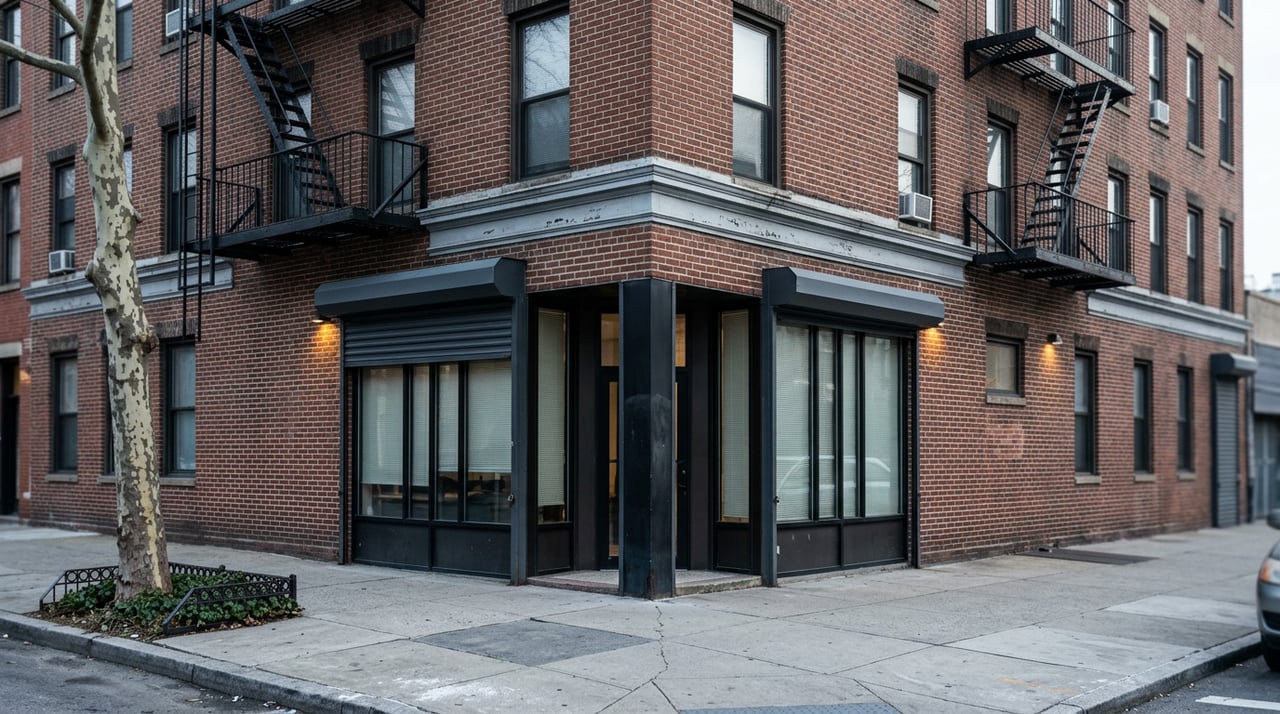
Many Queens mixed-use assets are classic walk-ups with ground-floor retail and 2 to 4 floors of apartments. If your retail is vacant, that can attract owner-occupiers or tenants-in-tow who value immediate control. In LIC and select corridors, added air rights or entitlements can draw development buyers who value future build potential over current NOI, especially given the OneLIC backdrop (OneLIC plan details).
Physical and legal condition
Title, CO, and violations are confidence builders. Confirm your Certificate of Occupancy matches marketing, pull a DOB and HPD violation report, and gather any environmental or property-condition assessments. Cleaning these items up early reduces re-trades and shortens diligence time (NYC DOB guidance on CO and filings).
Two quick scenarios: sell or hold?
Scenario A: Mostly free-market, vacant retail, loan maturity in 12 months
- Why timing favors a sale: If refinancing lifts debt service sharply or requires new equity, a targeted sale can protect your yield. Owner-users and 1031 buyers often like vacant retail for immediate use.
- Pricing sensitivity example: A property with $200,000 in stabilized NOI values at about $3.33 million at a 6.0% cap and $2.86 million at a 7.0% cap, roughly a 14% difference. In a higher-rate environment, positioning to attract the most aggressive buyer pool matters. These are illustrative income-cap mechanics buyers use every day (mixed-use appraisal basics).
- Recommended move: Prep a fast off-market process focused on owner-occupiers, 1031 exchanges, and family offices, with a clear plan for credit-tenant leasing if applicable.
Scenario B: 80% rent-stabilized, long-dated fixed debt, steady occupancy
- Why timing favors hold or refinance: With limited near-term lease risk and manageable debt, you can focus on operations and incremental NOI growth under the latest RGB guidelines.
- Financing angle: If an interest-rate window opens for long-term fixed agency debt on 5+ unit buildings, refinancing can lock cost of capital and improve cash-on-cash returns without marketing risk (agency loan options overview).
- Recommended move: Hold, monitor OneLIC and local pipeline impacts on rents, and revisit a sale when buyer yield targets compress or when retail rollover is derisked.
Go-to-market strategy and seasonality
Off-market versus public listing
Choose off-market if confidentiality, loan-workout dynamics, or a known buyer list make a controlled process smarter. This can shorten exposure and reduce discovery risk. Choose a public listing when expanding reach will materially increase bids. Residential seasonality can boost traffic in spring, while institutional and family office buyers move when debt and returns pencil, regardless of month.
What to assemble now
- Current rent roll and lease abstracts for every commercial tenant.
- T-12 operating statement, current budget, and recent utility bills.
- Tenant status confirmations or estoppels where possible.
- Property tax bills and assessment history, plus any abatement evidence.
- Certificates of Occupancy, building plans, DOB and HPD violation printouts (DOB filing FAQs).
- Title report or commitment, survey, and any environmental reports.
- Loan documents and a payoff statement so you can compare sale versus refinance paths (multifamily lending overview).
What a tailored valuation should deliver
A fast market check should give you a preliminary value range, buyer types, and positioning advice within 48 to 72 hours. A full offering package typically takes 10 to 21 business days and includes a stabilized pro forma, comps, cap rate and DCF views, and a targeted buyer list. Expect a targeted off-market outreach phase of 2 to 6 weeks and a deal timeline of 30 to 120 days depending on complexity. Appraisals and lender underwriting can add 30 to 60 days to financed closings (appraisal process overview).
How to decide when to sell in Queens
- Start with what you cannot change: the rate path and your loan maturity. If refinance math does not work, prioritize sale preparation now.
- Layer in local supply and policy: OneLIC and borough construction pipelines can change rent growth expectations. Check your building’s regulated share and apply RGB renewal assumptions.
- Focus on levers you control: clean up legal items, verify the CO, and package a clear rent roll and T-12. Decide if an off-market test or a public listing will reach the best buyer for your asset’s profile.
When you want a senior, Queens-focused team to benchmark value, map buyer pools, and run a confidential, targeted process, connect with Asset CRG Advisors LLC. Our team pairs neighborhood depth with hands-on execution to position your mixed-use building for the right outcome at the right time.
FAQs
What indicators tell me it is time to sell a Queens mixed-use building?
- If your loan matures in the 2025 to 2027 window and a refinance would require new equity or raise debt service materially, market timing often favors a sale given tighter lending standards.
How do Queens rezonings like OneLIC affect my timing?
- The OneLIC plan is expected to facilitate about 14,700 new homes, which changes long-run rent and development expectations in LIC and nearby areas, so incorporate that supply outlook into your hold-versus-sell decision.
How does rent stabilization change buyer pricing in Queens?
- With regulated units, annual rent increases follow RGB guidelines, which narrows upside and typically widens cap rates compared to free-market rent rolls, so expect a smaller buyer pool and longer marketing.
What documents do buyers and lenders ask for first on mixed-use assets?
- A current rent roll, a trailing-12-month income and expense statement, and commercial lease abstracts are standard day-one asks that drive initial pricing and financing feedback.
Should I go off-market or do a public listing in Queens?
- Use off-market if confidentiality or a known buyer pool can deliver speed and certainty; choose a public listing if expanded exposure is likely to bring meaningfully better bids.
How long does a tailored valuation and marketing process take?
- A preliminary valuation can arrive within a few days, a full offering typically takes 10 to 21 business days, and a sale process can run 30 to 120 days depending on complexity and financing.